

WHY COMPACT CORE
SANDER Projects: CORE N as the Standard
CORE X Applied Only Under Special Conditions
SANDER COMPACT CORE N and SANDER COMPACT CORE X,
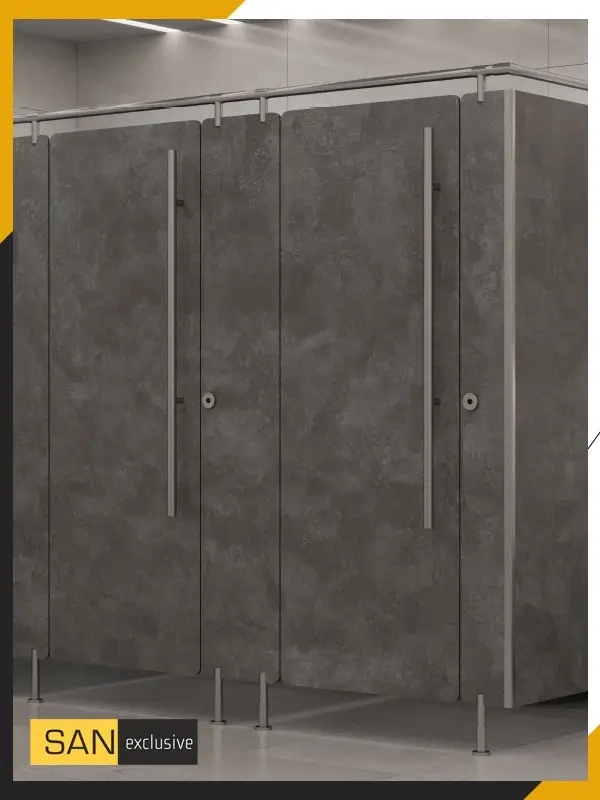
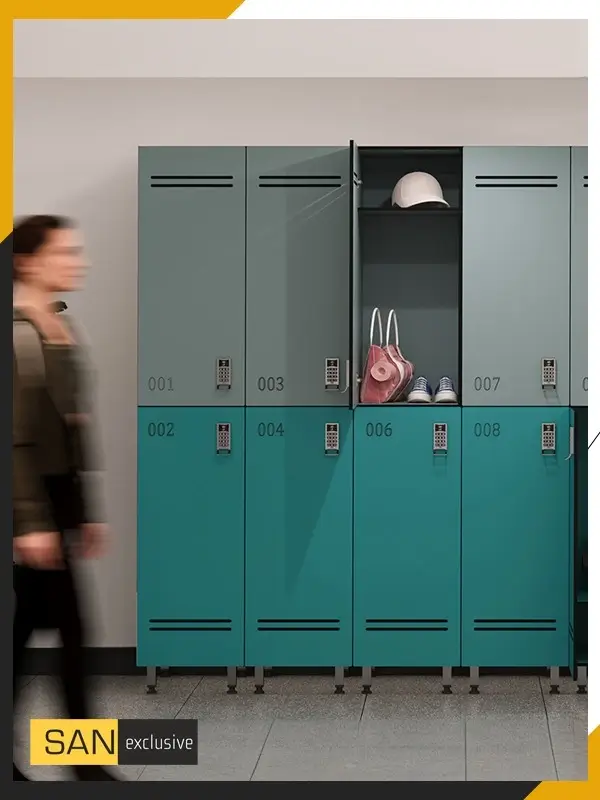
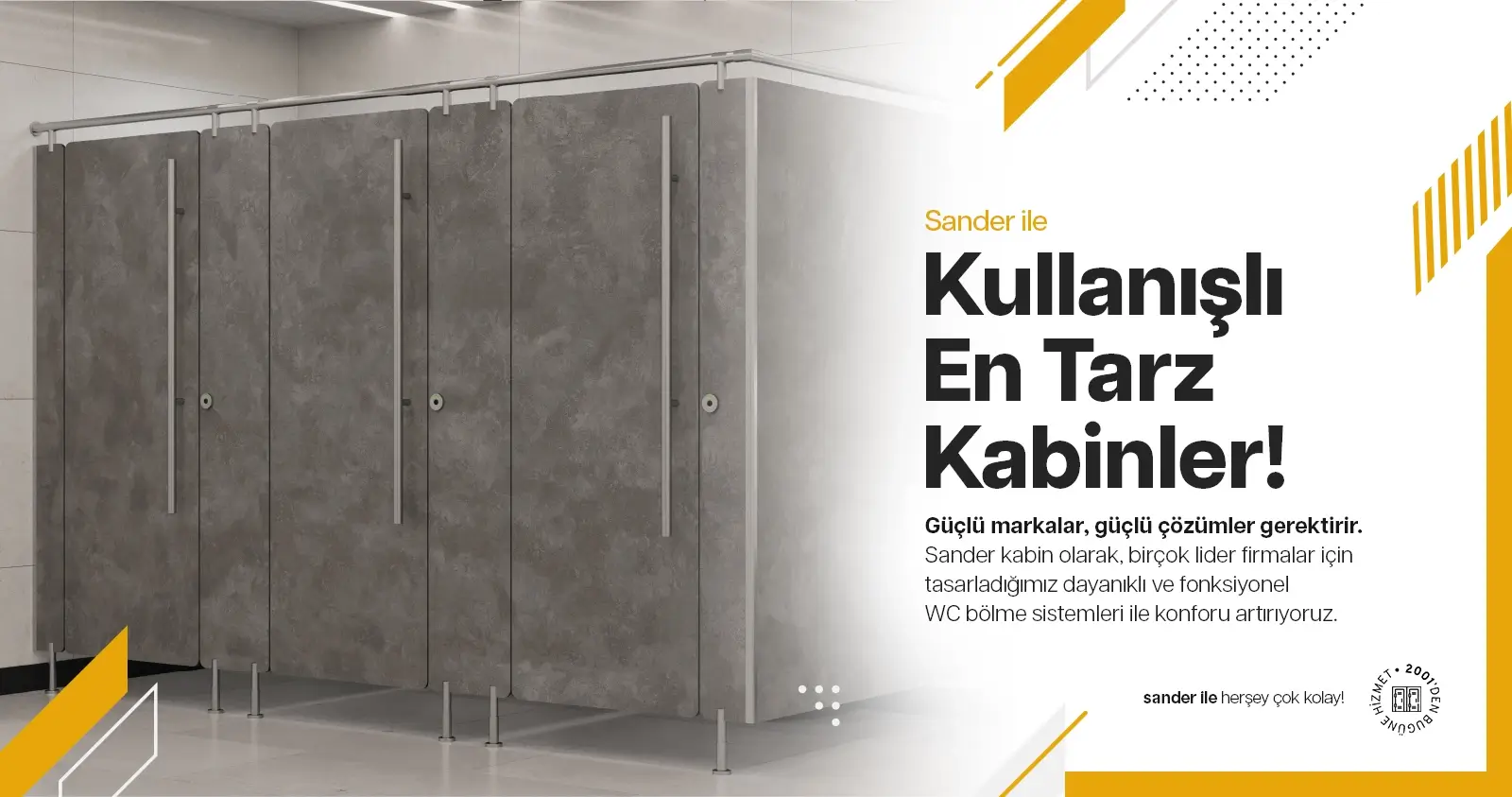
panels are compact laminate solutions designed for use in wet areas and commercial environments. Their visual, surface, and functional characteristics are fully aligned with the compact laminate panels commonly used in the industry.
Depending on the project’s usage scenario, CORE N is selected for standard applications, while CORE X is preferred in areas that require intensive and heavy-duty performance. Both panels are evaluated as integrated components that operate seamlessly with Sander’s system elements.
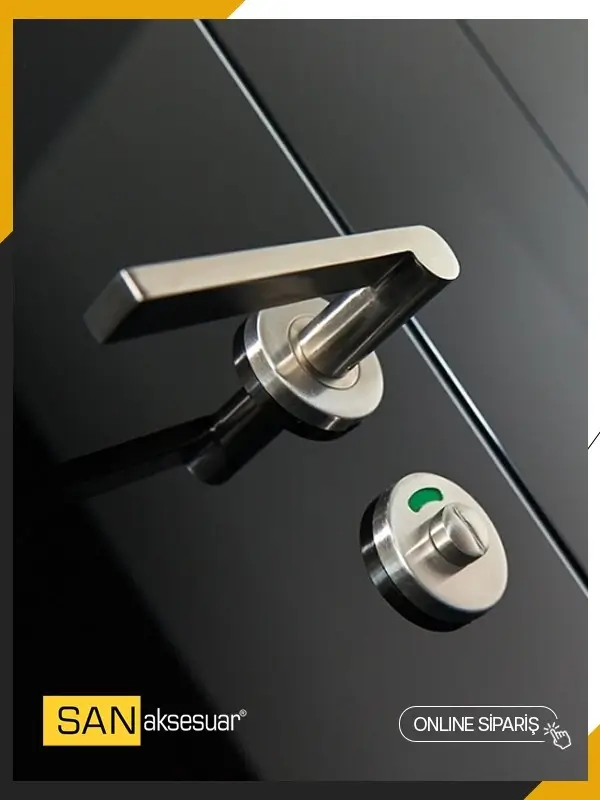
To ensure system integrity and guarantee long-term performance, accessories fully compatible with the panel system are included. All fasteners, mounting screws, and accessories used within the system are designed and manufactured by Sander. This approach ensures perfect compatibility among system components and secures consistent long-term performance.
SANDER Compact Panel Systems CORE N & CORE X
1) Defining the Real Problem in Wet Areas
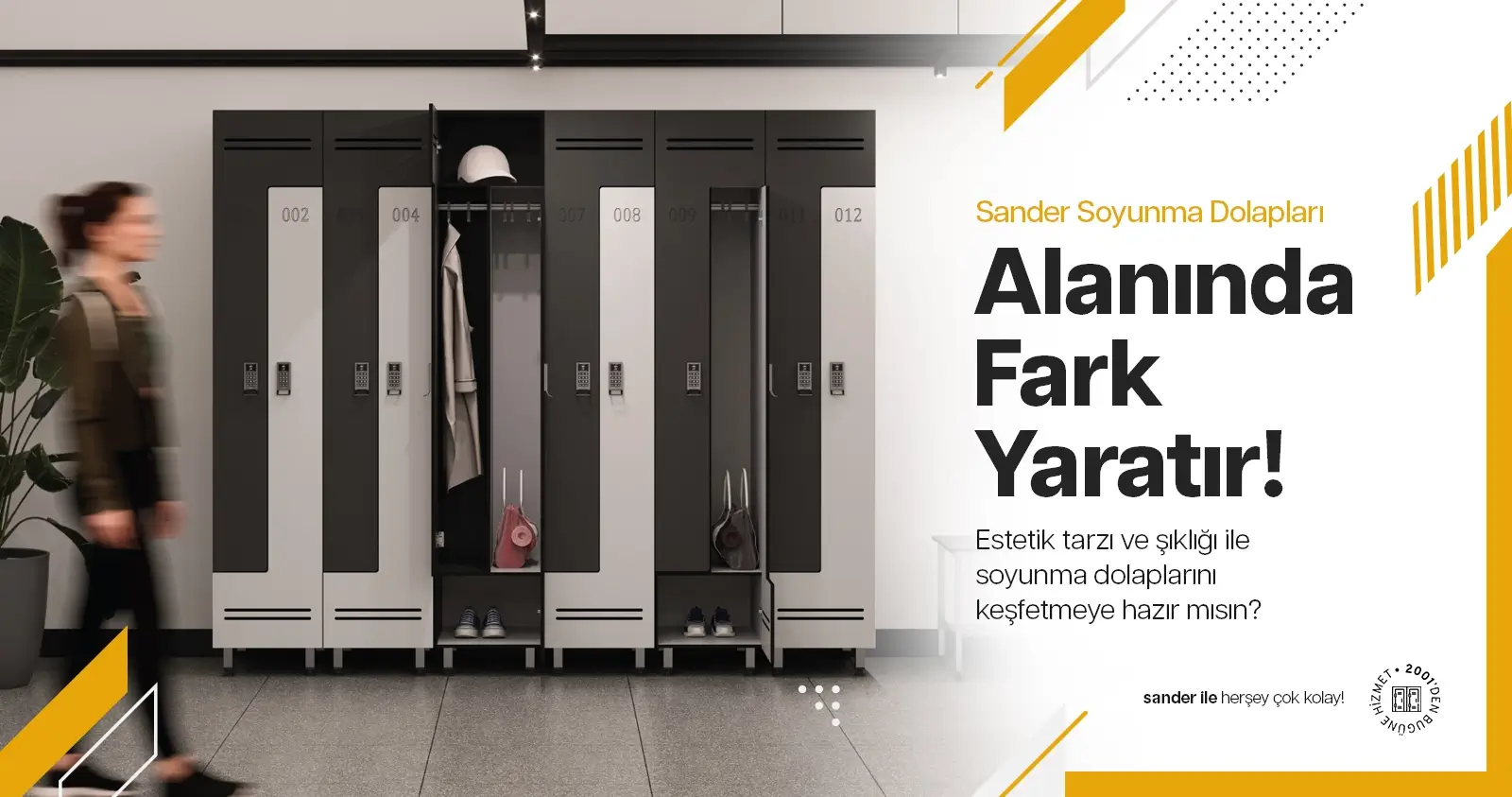
Wet areas in architectural projects cannot be evaluated based solely on aesthetic expectations. WC cubicles, changing rooms, and shower cabins are subjected to high user traffic, continuous door–opening cycles, cleaning chemicals, fluctuating humidity levels, and in some zones, direct water exposure.
Therefore, panel systems used in these environments must be evaluated not only by their initial appearance but by how they behave over time, how well they maintain their form, and how their maintenance requirements can be managed.
SANDER’s approach is based on differentiating wet areas not as a single category but according to their specific operating conditions.
2) CORE N | WHY IS IT THE STANDARD?
Under standard usage conditions, CORE N:
• Maintains its dimensional stability in the long term
• Prevents misalignment in doors or panel joints
• Ensures compatibility with daily cleaning and hygiene requirements
Particularly in WC cubicles, where:
• User traffic is high
• Door–opening cycles are frequent
• Cleaning frequency is intensive
CORE N delivers consistent, predictable performance and serves as a reliable reference point in projects.
3) THE INTENTIONAL LIMITS OF CORE N
In SANDER’s system approach, every product has a proper area of use.
CORE N is not positioned for shower cabins where continuous and direct water contact occurs.
This is not a weakness; it is a conscious technical boundary.
When conditions extend beyond standard usage scenarios, an elevated solution becomes necessary.
Shower cabins represent the most challenging type of wet area. Continuous water exposure, high humidity, and mechanical stress push the area beyond standard applications.
At this point, SANDER COMPACT CORE X acts as the system’s complementary component.
CORE X provides:
• High durability under continuous water contact
• Additional performance where mechanical load is increased
• Extra safety and performance reserves for critical applications
4) THE CORRECT INTERPRETATION OF CORE X
CORE X is not an alternative to CORE N.
CORE X is a complementary solution activated only when standard limits are exceeded.
This approach ensures:
• No unnecessary cost increases
• Higher performance is used only where required
• Project budgets remain balanced for technical reasons
5) SANDER’S APPROACH | A System, Not a Product
SANDER does not treat compact panels merely as surface materials.
A panel is evaluated as a system element, together with hinges, locks, feet, connection profiles, and installation details.
Thanks to this system-oriented approach:
• Mechanical loads are distributed evenly across the panel
• Alignment issues at door–panel joints are minimized over time
• Long-term stable and predictable performance is achieved
This perspective reduces technical risks during and after installation while keeping operational and maintenance costs under control.
6) THE CONCEPT OF A STANDARD PANEL | CORE N’s Position
Every architectural project requires a standard panel solution that simplifies design and installation, reduces risks, and ensures reliability on site.
SANDER COMPACT CORE N directly fulfills this need.
CORE N has been positioned as the main panel solution reliably used in the majority of projects based on SANDER’s extensive field experience.
7) MATERIAL REFERENCE
Panels with a high-density fiber structure (>1050 kg/m³) are considered the technical reference for dimensional stability and mechanical durability in humid environments.
SANDER’s panel philosophy considers the panel not merely as a surface but as a functional building element.
8) SYSTEM INTEGRITY
Panel performance becomes meaningful only when evaluated together with hinges, locks, feet, and connection profiles.
In SANDER systems, all components are:
• Fully compatible with the panel
• Designed to balance load distribution
• Engineered to support long-term stability
10) CONCLUSION | CLEAR ARCHITECTURAL DECISION FRAMEWORK
SANDER’s panel decision model is straightforward:
• CORE N is the standard and reliable solution for the vast majority of architectural projects.
• CORE X is the complementary option activated for shower cabins and special conditions where standard performance is insufficient.
References and Technical Foundations
The technical positioning of SANDER Compact Core N panels and their intended usage boundaries are based on internationally defined performance criteria for compact laminate products and technical evaluations specific to wet area applications.
Within this framework, the expectations defined in TS EN 438 (Compact Laminate)—including dimensional stability, surface durability, chemical resistance, and emission values—have been evaluated according to the intended usage scenarios.
Compact Core N panels are designed particularly for humid indoor environments such as public WC cubicle applications.
During this technical assessment, thickness and tolerance values were defined to ensure long-term stability in humid interiors, while surface properties were determined to provide resistance against cleaning chemicals, scratching, and staining. Formaldehyde emission values were kept within safe limits for indoor environments.
Accordingly, Compact Core N panels are evaluated as suitable for WC cubicles in shopping malls, schools, offices, hospitals, and similar indoor public spaces.
The product’s usage boundaries are defined with the same technical transparency.
Compact Core N is not designed for applications subject to continuous direct water pressure. Shower cabins and open-edge applications with persistent water exposure fall outside the intended use.
This technical limitation is not related to material quality but is derived from engineering decisions and performance criteria defined for the product’s intended usage.
SANDER’s methodology positions products not only based on technical values but with accurate usage definitions and clear performance expectations.
Technical Specifications and Performance Criteria